Careers
Work with KHM Technologies.
Current opening

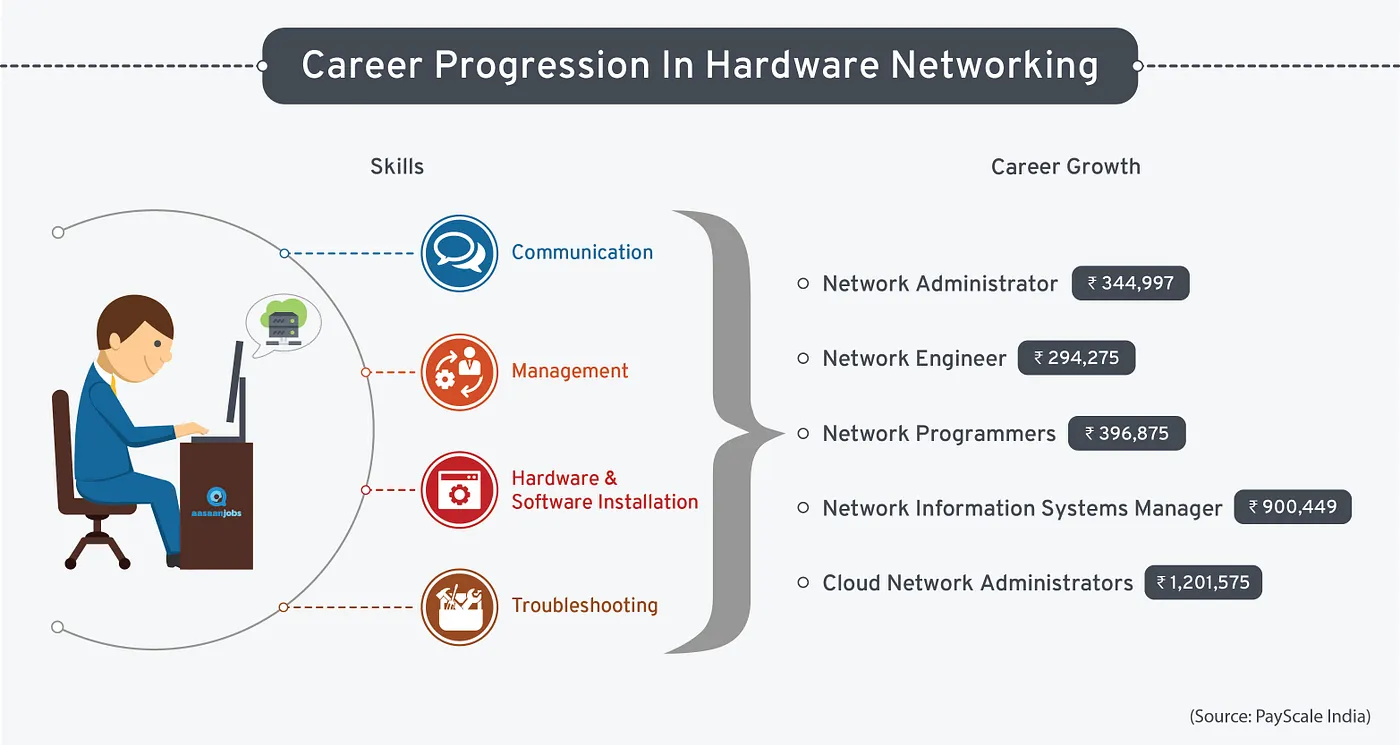
NETWORKING CAREER PATH
A career path in networking typically starts with foundational technical support roles and progresses to advanced positions in engineering, architecture, or cybersecurity. Key steps include obtaining degrees or certifications and gaining hands-on experience.
Foundational career steps
To begin a career in networking, you should acquire a solid understanding of fundamental concepts and gain practical skills.
- Education and training: A bachelor's degree in Computer Science, Information Technology, or a related field can be a strong starting point, but it is not always mandatory. Many professionals also enter the field through professional certificates, IT bootcamps, or hands-on experience.
- Entry-level certifications: Earning foundational, vendor-neutral certifications is highly recommended to demonstrate your skills to employers. Popular options include:
- CompTIA Network+: Covers essential networking concepts and is a widely recognized entry-point for IT professionals.
- Cisco Certified Network Associate (CCNA): The most popular vendor-specific certification, which focuses on Cisco products but provides in-depth, hands-on knowledge of networking fundamentals applicable across vendors.
- Entry-level experience: Start in a junior or support-focused role to gain practical, real-world experience. Common entry-level positions include:
- Technical Support Specialist: Addresses day-to-day IT issues, including basic network troubleshooting.
- Network Operations Center (NOC) Engineer: Monitors the health and performance of an entire network and resolves basic issues.
- Network Administrator: Manages and maintains an organization's existing network infrastructure.
Mid-level advancement
After a few years of experience, you can pursue more specialized and responsible mid-level positions.
- Network Engineer: Designs, implements, and manages more complex network infrastructure, including routers, switches, and firewalls. Specializations can include cloud, security, or wireless networking.
- Senior Network Engineer: Takes on leadership roles for network projects and resolves complex networking problems. This position requires a deeper understanding of network technologies and excellent problem-solving skills.
- Advanced certifications: Obtaining professional-level certifications validates your expertise and opens doors to more advanced roles. Options include:
- Cisco Certified Network Professional (CCNP): An advanced certification for engineers with three to five years of experience who want to focus on a specific enterprise networking solution.
- Vendor-specific cloud certifications: Certifications like AWS Certified Advanced Networking or Microsoft Certified: Azure Administrator Associate are crucial for specializing in cloud environments.
Senior and specialized paths
Experienced networking professionals can move into high-level strategic roles or specialize in highly technical areas.
- Network Architect: Responsible for the high-level design of large-scale, complex networks. This role requires broad knowledge across many technologies and typically involves presenting strategies to management.
- Network Security Engineer: Specializes in protecting network infrastructure from cyber threats by implementing firewalls, VPNs, and intrusion detection systems.
- Cloud Network Engineer: Designs and manages network solutions specifically within cloud environments like AWS, Azure, or Google Cloud.
- Principal Engineer/Chief Architect: These top-tier technical roles involve overseeing entire network strategies, leading large teams, and making strategic decisions for the company.
- IT Management: Professionals with strong technical and leadership skills may transition into management positions, such as Network Manager, IT Director, or Chief Information Officer (CIO).
Essential skills for success
Beyond technical knowledge, successful networking professionals cultivate several soft skills to thrive in their careers.
- Problem-solving: Networks are complex and prone to issues. A strong ability to diagnose and solve problems is essential.
- Communication: You must be able to clearly communicate complex technical concepts to non-technical colleagues, managers, and clients.
- Adaptability: The technology landscape is constantly changing, so a commitment to continuous learning is critical for staying relevant.
- Teamwork: Many network projects involve collaboration with other IT professionals, developers, and business stakeholders.